People see brands in many places like their phones or on the street. Scattered ads do not work well for folks who want a clear message. Customers want to see the same style and tone everywhere they go. They look for things that feel real and matter to their lives. This is where 360 marketing helps by pulling every channel together. It links your ideas and tech to make sure you tell one story. Every time a person sees your brand, it should feel like the same voice. Using this method makes it much easier for people to know your brand.
What Is 360-Degree Marketing?
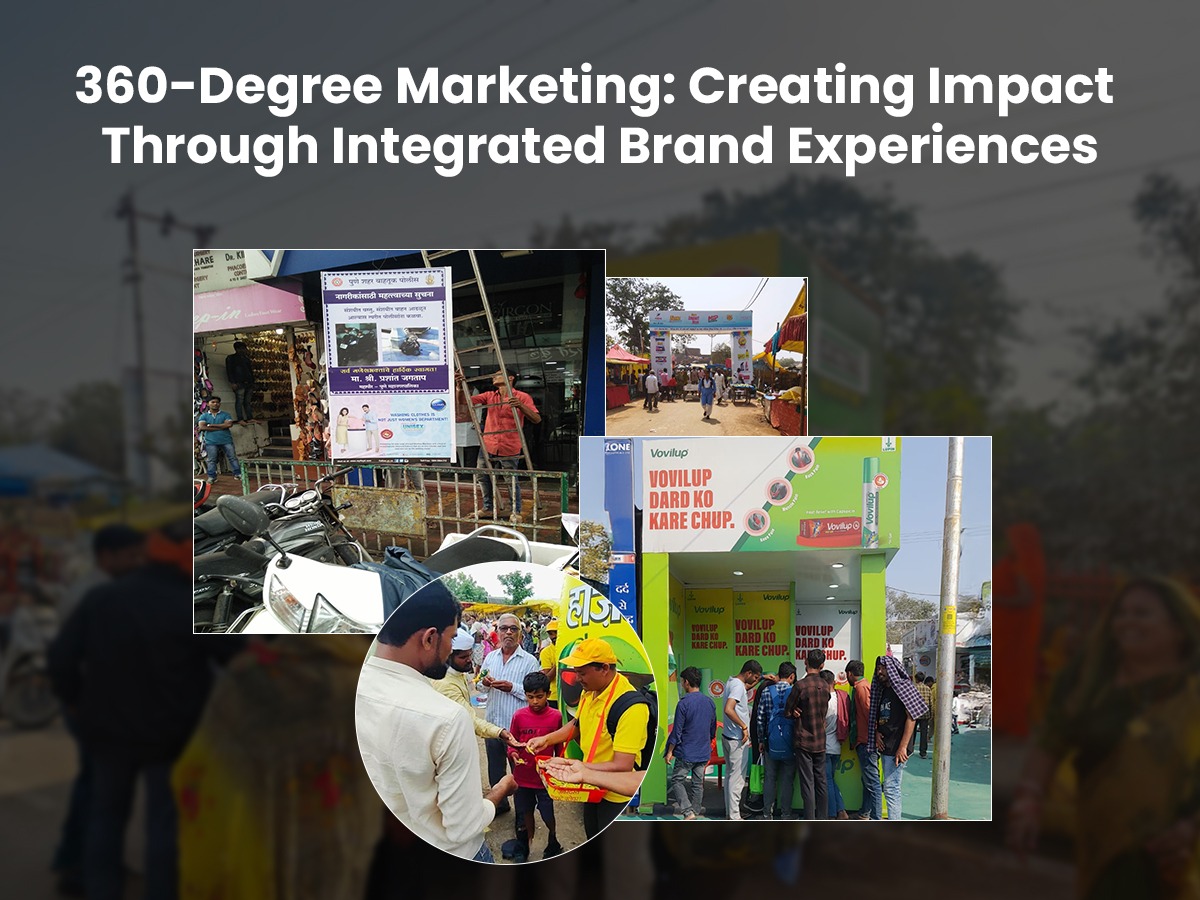
A comprehensive strategy, 360-degree marketing unifies all marketing channels—digital, outdoor, on-ground, experiential, and media—under a single strategic heading. Each channel enhances the others, increasing impact, recall, and reach rather than operating in isolation.
This strategy guarantees that:
- Across all platforms, brand messaging is consistent.
• Every touchpoint offers audiences a consistent experience. - Marketing initiatives increase recall and engagement.
Campaigns produce quantifiable business results.
Whether it’s a public campaign, corporate brand, or large-scale activation, 360-degree marketing combines engagement and visibility in a harmonious way.
The Power of On-Ground and Outdoor Marketing in Cultural Landscapes
Even though digital platforms predominate in daily communication, on-site marketing is still indispensable, particularly in culturally significant events where physical presence has emotional significance. Big events offer unparalleled chances for face-to-face communication, exposure, and immersive narratives.
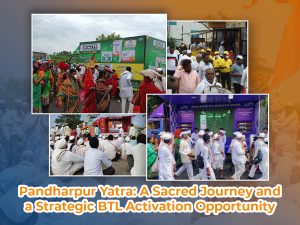
Outdoor branding in Pandharpur Wari, where millions of devotees take part in a profoundly spiritual and disciplined journey, is one such potent example. In this case, branding is about respect, contextual relevance, and careful environmental integration rather than loud promotion.
Strategically used, outdoor branding at these kinds of events can:
- Establish a strong emotional bond with viewers
• Get a ton of organic exposure
• Boost brand recall and trust
Brands should be in line with cultural values and goals.
Brand Activation in Pandharpur Yatra: Beyond Visibility
A sophisticated grasp of audience sentiment, movement patterns, and cultural sensitivity is necessary for Pandharpur Yatra brand activation to be successful. In contrast to traditional activations, the emphasis is on experience, service, and utility rather than aggressive selling.
Among the possible meaningful brand activations are:
- Pilgrims are supported by service-driven installations
- Communication that is safety-oriented or informative
- Well-planned utility areas or rest areas
• Storytelling in visual form that reflects the essence of the Yatra
By allowing brands to participate in the journey instead of acting as outside advertisers, these activations promote goodwill and enduring brand affinity.
Integrating Digital and Physical Touchpoints
The digital and real worlds are connected by true 360-degree marketing. When backed by digital amplification, content production, and data-driven insights, on-ground experiences have a longer lifespan and a wider audience.
For instance:
- Geo-targeted digital campaigns can strengthen outdoor branding.
• Social media can be used to record and share on-ground activations.
• QR-based interactions can connect online and offline platforms.
• Impact beyond foot traffic can be measured with post-event analytics.
This integration guarantees that campaigns are long-lasting and continue to provide value long after the event is over.
Strategic Planning: The Backbone of 360-Degree Marketing
Careful planning is the foundation of any successful 360-degree campaign. The strategy outlines the role of each touchpoint, how various channels will cooperate, and how success will be determined.
Important strategic components consist of:
- Journey mapping and audience behavior
• Choosing a channel according to its relevance and context
• Creative coherence among formats
• Logistics and operational execution
• Monitoring and improving performance
Compliance, permissions, crowd control, and ethical communication are additional components of strategy for culturally significant events.
Measuring Impact Beyond Impressions
The idea that outdoor and experiential marketing is hard to quantify is one of the most common misconceptions about it. In practice, contemporary 360-degree marketing evaluates efficacy using a variety of metrics.
These could consist of:
Footfall and interaction metrics
- Sentiment analysis and brand recall
- Digital interaction connected to physical activity
• Organic reach and media attention
• Long-term enhancement of brand recognition
Brands can obtain a comprehensive understanding of campaign performance by integrating qualitative and quantitative insights.
Why 360-Degree Marketing Matters More Than Ever
In a noisy and cluttered media landscape, people no longer pay attention to individual messages. What grabs people’s attention is now relevance, consistency, and authenticity. 360-degree marketing helps a brand cut through the noise and show up meaningfully and physically where consumers are.
Such events, for instance, highlight how effective integration of outdoor branding for Pandharpur Wari and brand activation for Pandharpur Yatra can yield powerful and extensive results beyond just branding and advertising. When conducted and aligned with intrinsic brand values, effective brand credibility and trust can be fostered.
Conclusion
As 360-degree marketing means not being everywhere, it means being everywhere and being relevant. Thus, it becomes possible to reach and connect with the audience in ways that are relevant, creative, and deeper, and yet again experiential.
While in culturally thriving settings or at large congregations, a strategically executed 360-degree campaign allows marketers to transition from promotion to participation. For brands that aim at effective visibility, remembrance, and recalling attention, 360-degree marketing remains the strongest option.